

-
Stateful vs Stateless: Understanding the Key Differences in Modern Software Syst
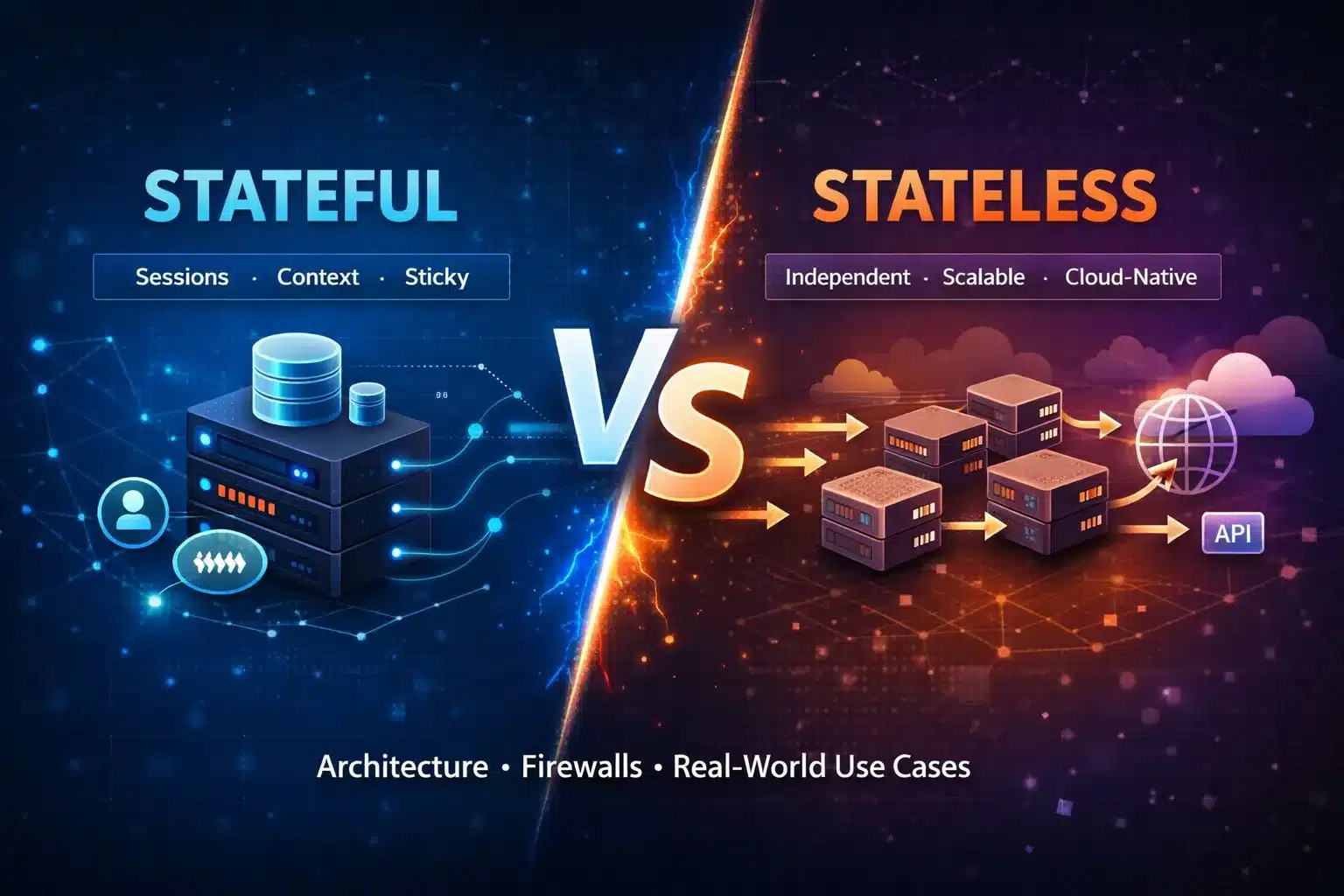
In modern software development, especially when building APIs and distributed applications, developers often come across the concepts of <b style=”font-family: inherit; font-size: inherit;”>stateful vs stateless systems. Understanding the difference between these two architectures is important because it affects scalability, performance, and system design.
If you want a deeper technical explanation and practical examples, you can explore this detailed guide on stateful vs stateless architectures and how they are used in modern API development.
What Does “State” Mean in Software?
In computing, state refers to information stored by a system about previous interactions. This information helps the system understand context when processing future requests.
For example, when a user logs into a website, the application may store information about the user session, preferences, or authentication status. This stored information becomes the state of the system.
Systems can either maintain this information between requests (stateful) or treat each request independently (stateless).
What Is a Stateful System?
A stateful system stores information about previous client interactions and uses that information when handling future requests. In other words, the server remembers what happened before.
For example, when you add products to a shopping cart on an e-commerce website, the server keeps track of the items you selected. Each new action such as adding another product—depends on the previously stored data.
Characteristics of Stateful Systems
Stateful systems usually have the following characteristics:
-
They maintain session data between requests
-
The server stores information about the client
-
Requests depend on previous interactions
-
Sessions are often used for authentication and user tracking
Examples of Stateful Applications
Common examples of stateful systems include:
-
Online shopping carts
-
Database sessions
-
Multiplayer gaming servers
-
FTP connections
These systems require continuous interaction where previous steps affect future operations.
What Is a Stateless System?
A stateless system does not store any information about previous requests. Every request from a client must contain all the information needed to process it.
This means that each request is handled independently, without relying on stored session data.
A good example is a REST API request where authentication tokens or parameters are sent with every request. The server processes the request without remembering past interactions.
Characteristics of Stateless Systems
Stateless architectures typically have these features:
-
No server-side session storage
-
Each request is independent
-
Easier load balancing
-
Higher scalability and reliability
Stateless APIs are often used in cloud-native systems and microservices architectures because they are easier to scale and distribute across servers.
Key Differences Between Stateful and Stateless Systems
The differences between stateful and stateless systems mainly relate to how they manage data and requests.
In a stateful system, the server stores information about previous interactions and uses that context to process new requests. This allows applications to provide a personalized user experience but can make scaling more difficult.
In contrast, stateless systems treat each request independently, meaning the server does not store session data between interactions. This design simplifies scaling because requests can be handled by any server instance.
Another difference lies in resource usage. Stateful systems may require more memory and storage to maintain session data, while stateless systems typically use fewer server resources because they do not maintain state information.
Advantages of Stateful Architecture
Stateful systems offer several benefits in scenarios where maintaining context is important.
One major advantage is better user experience. Because the server remembers user data, applications can provide personalized interactions without requiring repeated input.
Stateful systems are also useful for complex workflows where multiple steps depend on previous actions, such as payment processing or real-time collaboration tools.
However, managing session data increases complexity and can make systems harder to scale.
Advantages of Stateless Architecture
Stateless architectures are widely used in modern distributed systems due to their flexibility and scalability.
One key advantage is horizontal scalability. Since the server does not store session data, requests can be distributed across multiple servers without affecting functionality.
Another advantage is simpler system design. Without session management, stateless applications are easier to maintain, debug, and test.
Stateless systems also provide better fault tolerance. If one server fails, another server can handle incoming requests without losing session data.
When Should You Use Stateful Systems?
Stateful architectures are ideal when applications require persistent interactions between the client and server.
Typical use cases include:
-
Online gaming platforms
-
Banking transactions
-
Real-time chat applications
-
Collaborative editing systems
In these cases, maintaining session state improves performance and user experience.
When Should You Use Stateless Systems?
Stateless architectures are preferred when scalability and flexibility are the main priorities.
They are commonly used in:
-
REST APIs
-
Microservices architectures
-
Cloud-native applications
-
Serverless computing platforms
Because stateless systems treat each request independently, they can easily scale across multiple servers and support large numbers of users.
Stateful vs Stateless in Modern API Development
Modern API architectures often prefer stateless design because it aligns well with distributed systems and microservices. Stateless APIs allow developers to scale applications quickly and handle millions of requests efficiently.
However, some applications still require stateful interactions. In these cases, developers may combine both approaches—for example, using stateless APIs while storing session data in databases or caching systems.
Understanding the trade-offs between stateful and stateless systems helps engineers design better architectures that balance scalability, performance, and user experience.
Conclusion
The debate between stateful vs stateless architectures is not about choosing one approach over the other. Instead, it is about understanding when each design is appropriate.
Stateful systems maintain session data and provide contextual interactions, making them ideal for complex workflows. Stateless systems treat each request independently, enabling better scalability and reliability.
As modern applications continue to move toward cloud-native architectures, stateless designs are becoming more common. However, both approaches remain essential tools for building efficient and reliable software systems.
keploy.io
Stateful vs Stateless: Architecture, Firewalls & Trade-offs
Learn the real difference between stateful vs stateless architectures, firewalls, scalability, performance, and testing trade-offs.
-
Desculpe, não há respostas até agora. :(
Log in to reply.