

-
How Textideo Turns Simple Ideas Into Visual Stories
Some creative tools overwhelm you with timelines, layers, menus, and dozens of editing panels. And then there are tools like Textideo — a platform built around the simple idea of text to video, where a short description can become a visual scene.
The first time I tried it, I expected a typical AI generator. Something that produces interesting results but still requires a lot of polishing afterwards.
Instead, what surprised me was how quickly a rough idea could turn into something visual and structured. The process didn’t feel like traditional video editing at all. It felt closer to writing — describing a scene and watching it come to life.
This post is about that experience: how a tool built around text can quietly change the way you think about creating videos.
<h2>A Creative Tool That Starts With Words</h2>
Most video platforms begin with footage. You upload clips, arrange them, trim them, and add effects.
Textideo starts somewhere else entirely.
You begin with a description.
A place. A moment. A mood. Sometimes just a single idea.
Instead of asking you to edit existing material, the platform asks you to imagine what the scene should look like. From there, the system translates that description into visuals.
The first few attempts feel experimental, almost playful. You’re not adjusting frames or worrying about camera angles yet. You’re simply exploring how different prompts influence the outcome.
That shift alone makes the creative process feel surprisingly different.
<h2>Small Changes Can Transform the Result</h2>
One thing I quickly noticed is how sensitive the results can be to tiny adjustments.
A single extra detail in your prompt — lighting, time of day, camera movement — can dramatically change the tone of the generated video.
Sometimes the change is subtle.
Other times it completely reshapes the scene.
That feedback loop becomes addictive. You start experimenting with phrasing, trying to understand how the system interprets your ideas.
It’s a little like directing, but using language instead of equipment.
<h2>Moments That Make You Smile</h2>
<h3>When the AI Understands Exactly What You Meant</h3>
Every now and then, you describe a scene and the result feels almost perfectly aligned with what you imagined.
The lighting looks right. The movement makes sense. The composition feels balanced.
Those moments are oddly satisfying because they feel collaborative, like the tool understood the intention behind your words.
<h3>When the Output Surprises You</h3>
Of course, it doesn’t always match expectations.
Sometimes the generated video interprets your prompt in an unexpected way. A scene might look more dramatic than intended, or the pacing might feel different than imagined.
Instead of being frustrating, these surprises often lead to new ideas. What starts as an experiment can turn into something you didn’t plan but actually like more.
<h2>The Frustrating Side of Creative Automation</h2>
<h3>When the Idea in Your Head Is Hard to Describe</h3>
Not every concept translates easily into words.
There are moments where you know exactly what you want visually but struggle to describe it clearly enough for the system to interpret.
You rewrite the prompt, adjust details, and try again.
That process can take patience, but it also improves how you think about describing visual scenes.
<h3>When Simplicity Becomes a Challenge</h3>
Ironically, very simple prompts sometimes produce the most unpredictable results.
Without enough context, the system has more freedom in how it interprets the idea.
Learning when to add detail — and when to keep things minimal — becomes part of the creative process.
<h2>A Different Way to Think About Video Creation</h2>
Traditional video editing rewards technical skill. You learn tools, workflows, and shortcuts.
Text-driven video creation rewards something slightly different: imagination and clarity.
The better you describe your idea, the stronger the result tends to be.
Instead of mastering software panels, you start focusing on storytelling elements:
- What is happening in the scene?
- What mood should it convey?
- How should the camera move?
- What details make the moment feel real?
That shift makes the platform feel accessible even to people who have never edited a video before.
<h2>Why Tools Like This Feel Timely</h2>
Online content moves faster than ever. Creators are constantly producing short videos, visual posts, and creative clips for different platforms.
Generating visuals directly from ideas helps remove several steps from that process.
Instead of gathering footage, editing clips, and exporting versions, creators can start closer to the concept stage and move directly toward a finished result.
For many people, that efficiency is the biggest appeal.
<h2>Why I Keep Experimenting With It</h2>
What keeps bringing me back is curiosity.
Each prompt feels like a small creative experiment. Sometimes the output is exactly what I hoped for. Sometimes it pushes the idea in a completely different direction.
Either way, the process remains engaging because it blends imagination with immediate visual feedback.
That combination makes the tool feel less like software and more like a creative sandbox.
<h2>Final Thoughts: A New Kind of Creative Workflow</h2>
Instead of starting with files, timelines, or editing tools, creators can start with language.
Describe the scene.
Adjust the idea.
Watch the visuals evolve.
It’s a simple process on the surface, but it reflects the growing potential of modern ai video generator technology, where ideas can move from text to visual storytelling faster than ever before.
-
This discussion was modified 3 minutos atrás by
 aitools.
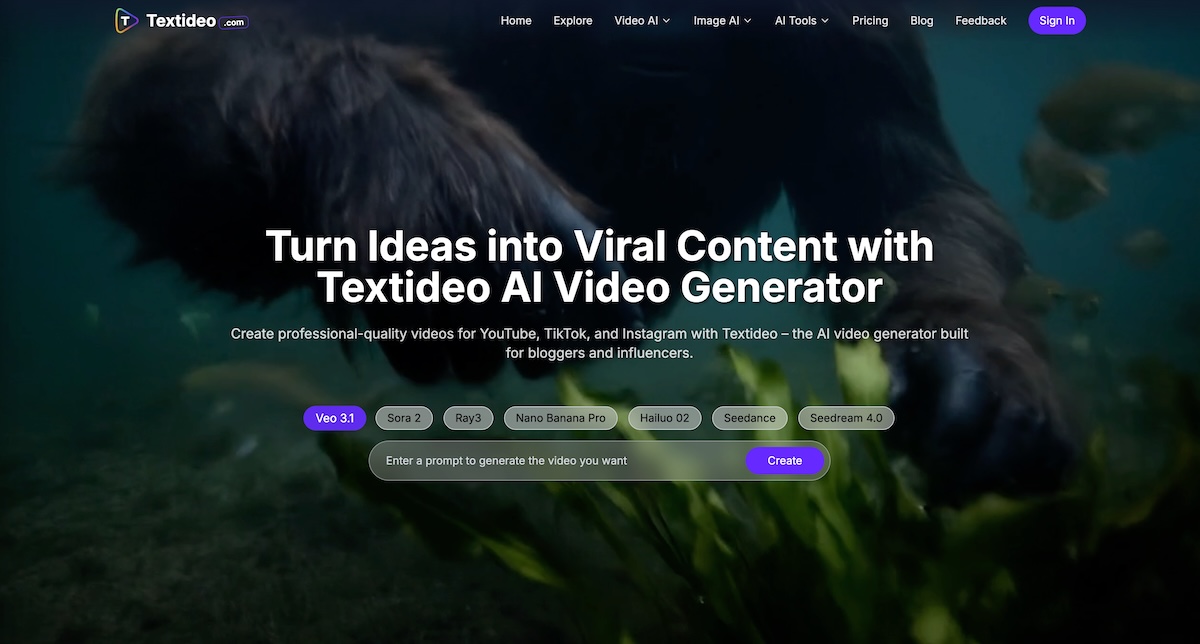
textideo.com
AI Video Generator for Content Creators & Influencers | Textideo
Create stunning videos for YouTube, TikTok, and Instagram with Textideo – the AI tool designed for content creators and influencers.
Desculpe, não há respostas até agora. :(
Log in to reply.