

-
How Do Software Testing Basics Shape a Strong QA Career?
Before diving into automation frameworks or performance tools, mastering software testing basics is what sets apart structured testers from script executors. These fundamentals define how you think about quality, not just how you test.
At a practical level, software testing basics cover:
<ul data-start=”359″ data-end=”760″>
Clear understanding of functional and non-functional requirements
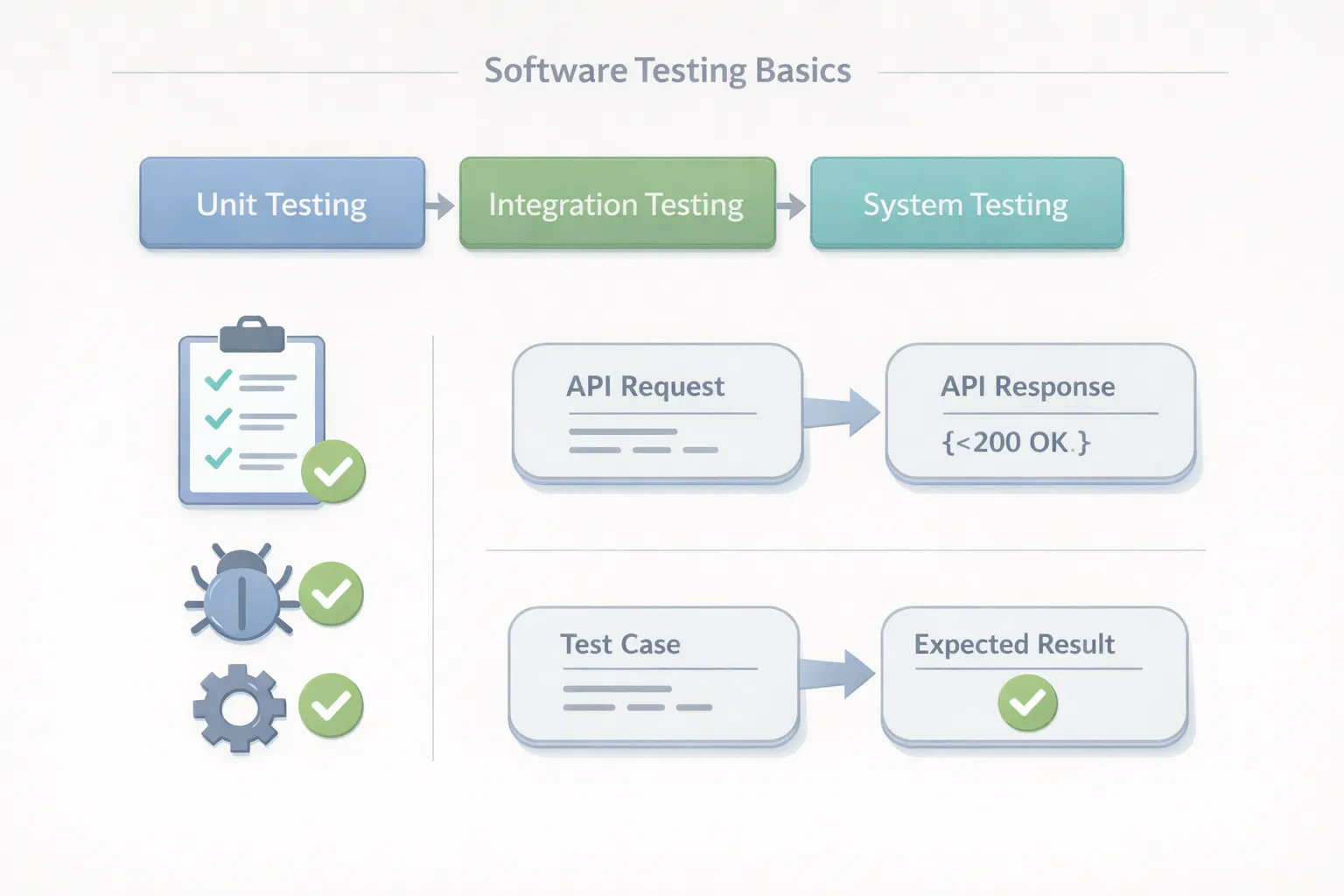
Writing effective test cases with defined preconditions and expected results
Knowing different testing levels (unit, integration, system, acceptance)
Applying core test design techniques like boundary value analysis and equivalence partitioning
Managing defects with proper documentation and severity classification
What makes these basics powerful is their impact on decision-making. When testers understand why they are testing – not just what they can:
<ul data-start=”903″ data-end=”1054″>
Detect requirement gaps early
Prioritize high-risk areas
Reduce redundant testing efforts
Contribute strategically in Agile discussions
Even in highly automated environments, software testing basics remain the intellectual framework behind every successful QA strategy. Tools may evolve, but foundational thinking continues to drive reliable software quality.
keploy.io
Software Testing Basics: A Guide for Beginners (2026)
Learn software testing basics from scratch. Principles, test types, defect reporting & CI/CD best practices in a clear, beginner-friendly guide
Desculpe, não há respostas até agora. :(
Log in to reply.